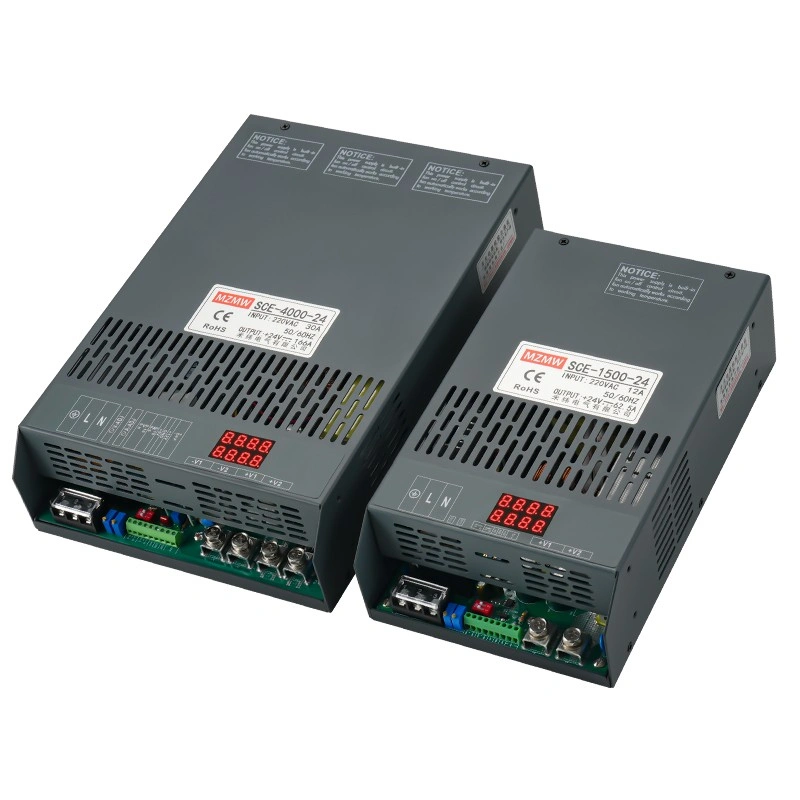
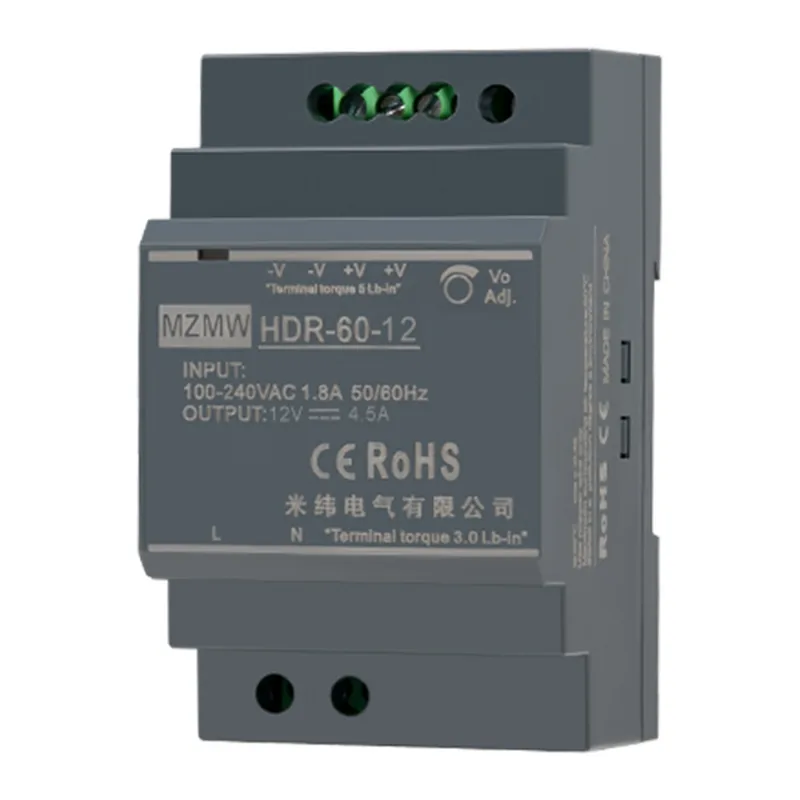
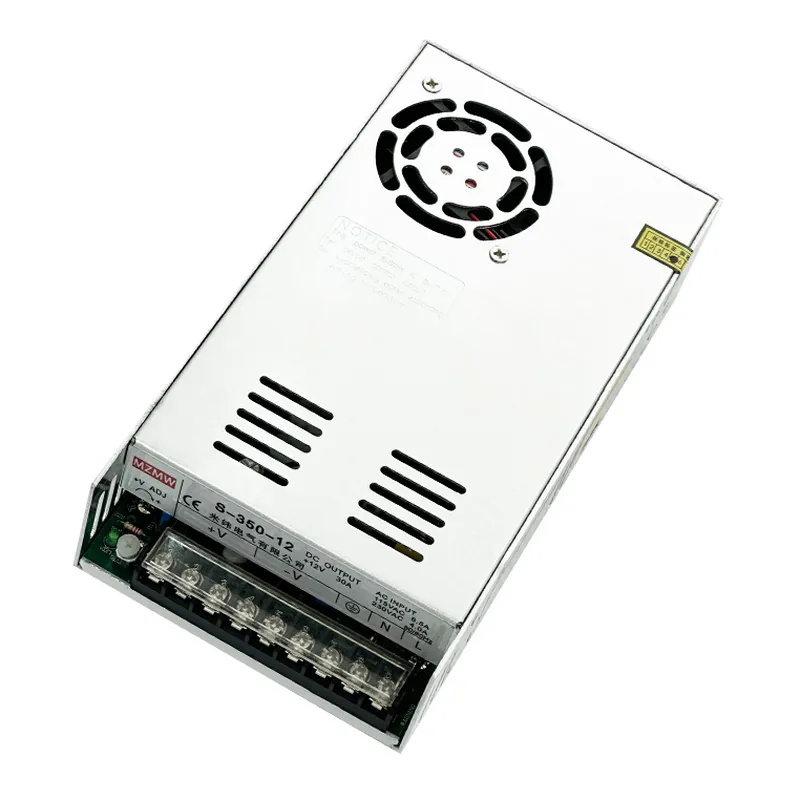
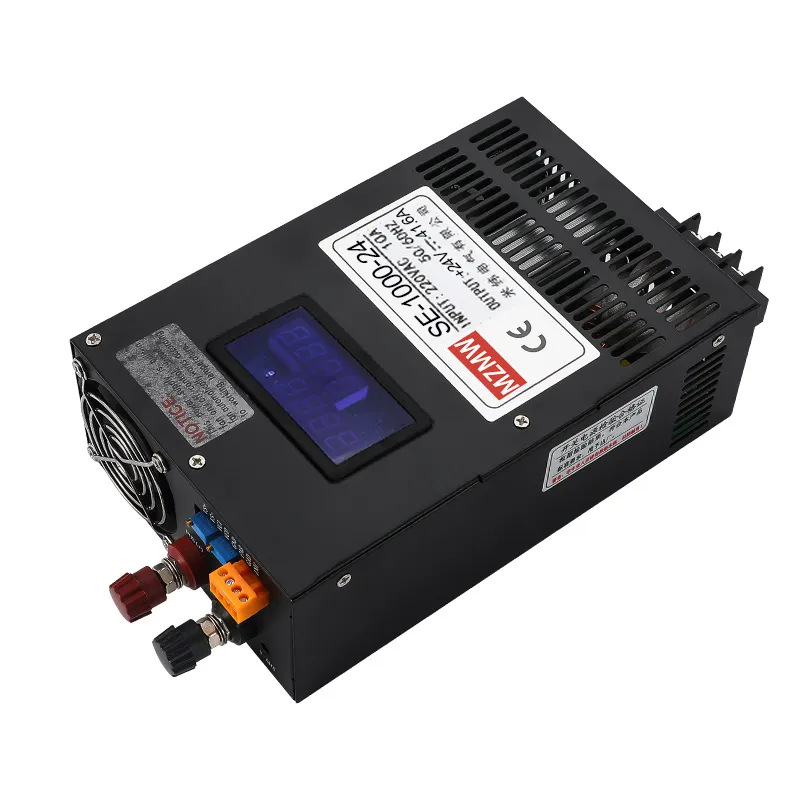
In industrial automation and process control, the DIN rail power supply is the unsung backbone of every control cabinet. Whether powering programmable logic controllers (PLCs), human-machine interfaces (HMIs), industrial Ethernet switches, or field sensors, a reliable DC rail ensures 24/7 continuous operation without unexpected line downtime.
With panel real estate at an all-time premium and cabinet internal temperatures often climbing above 50°C, selecting the right DIN rail unit requires balancing wattage sizing, thermal dissipation, mechanical footprint, and electrical protection.
Here is an engineering guide to selecting the ideal DIN rail power supply for your next control cabinet build, directly from the production floors at MZMW.
1. Why TS-35 DIN Rail Mount Dominates Control Cabinets
Unlike chassis-mount or enclosed metal-cage power supplies that require manual drilling and tapped standoffs, standard TS-35/7.5 and TS-35/15 DIN rails offer clear advantages for panel builders:
- Rapid Tool-Free Installation: Units snap onto the rail in seconds and lock securely with a sprung steel latch, cutting assembly hours on large cabinet production runs.
- Natural Convection Cooling: Vertically oriented ventilation channels draw cool air from the cabinet bottom and vent hot air through the top perforated mesh, eliminating the need for internal failure-prone miniature fans in power ratings up to 480W.
- High Vibration Resistance: Spring-loaded terminal blocks and rugged rail clamps maintain solid electrical contact even in machinery environments subject to mechanical shock and vibration.
- Simplified Maintenance & Retrofit: Upgrading capacity or replacing a unit takes minutes without disturbing adjacent wiring trunks.
2. Choosing Between Slim Plastic and Heavy-Duty Metal Enclosures
At MZMW, our DIN rail catalog divides into distinct series optimized for specific cabinet environments:
| Series | Power Range | Enclosure Type | Typical Applications | Key Advantage |
|---|---|---|---|---|
| HDR Series | 15W – 150W | Stepped Plastic (Class II) | Building automation, sub-panels, lighting control | Ultra-compact step shape, double insulation |
| NDR Series | 75W – 480W | Slim Metal Case | Industrial robotics, CNC control, packaging lines | Narrow width saves up to 40% DIN rail space |
| EDR Series | 75W – 150W | Economical Metal Case | General manufacturing automation, OEM machinery | Cost-effective industrial standard performance |
| DR Series | 30W – 240W | Classic Metal Case | Legacy retrofit, rugged factory automation | Proven field durability with wide terminal spacing |
| QYR Series | 120W – 480W | Digital Voltage Display | High-precision test benches, battery charging | Integrated real-time LED voltmeter & ammeter |
3. Electrical Sizing: Sizing with Safety Margins
When sizing DC output capacity, industrial design rules recommend running power supplies at 70% to 80% of rated continuous power:
$$\text{Recommended Supply Wattage} = \frac{\text{Total Steady-State Load (W)}}{0.75}$$
Why 20–30% Headroom Matters:
- Inrush Current of Capacitive & Inductive Loads: Relays, solenoid valves, and DC motor starters draw 2x to 5x nominal current during initial energization. Without headroom, the power supply enters overcurrent protection and stalls startup.
- Thermal Derating in Warm Cabinets: Inside sealed IP54/IP65 electrical cabinets, ambient temperatures frequently exceed 40°C. High operating temperatures naturally derate the allowable continuous output.
- Electrolytic Capacitor Lifespan: Electrolytic filter capacitors follow Arrhenius’ rule: for every 10°C drop in internal operating temperature, operating lifespan doubles. A supply running at 75% load runs substantially cooler than one driven to 100% capacity.
4. Key Electrical Protections to Verify
Industrial line conditions are rarely pristine. High-voltage switching transients, grid sags, and accidental output shorts must be absorbed without catastrophic damage:
- Hiccup vs. Constant Current Overload: For general electronics, Hiccup mode automatically cycles power until a short circuit clears, preventing continuous high heat. For heavy inductive loads (like small DC motors), constant current limiting maintains output voltage as long as possible to overcome peak starting torque.
- Overvoltage Protection (OVP): Clamps or latches the unit off if the internal feedback loop fails, safeguarding thousands of dollars in downstream PLC I/O cards.
- Over-Temperature Protection (OTP): Thermally coupled sensors throttle or shut down the primary converter if cabinet cooling fans fail or vents become obstructed.
- High-Pot Isolation: MZMW DIN rail units undergo rigorous 3000V AC primary-to-secondary isolation testing to ensure plant worker safety and noise immunity.
5. Factory Quality and Burn-In Verification
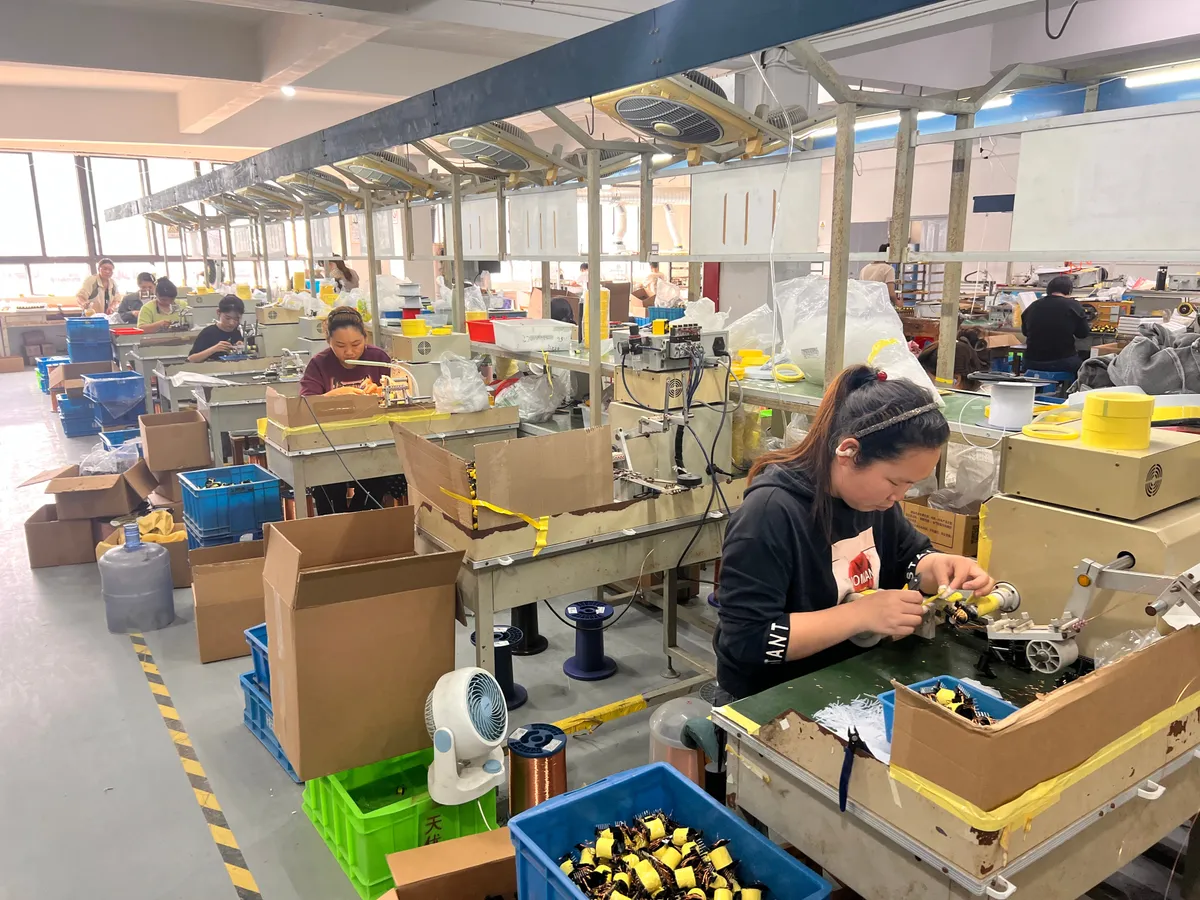
A specification sheet is only as reliable as the quality control behind it. At our Wenzhou manufacturing facility, every MZMW DIN rail unit undergoes:
- Automated SMT & In-Circuit Testing (ICT): Surface-mount pick-and-place precision assembly followed by 100% component connectivity checks.
- 48-Slot Full-Load Aging: Every single production batch is run under full load for 4 to 8 hours on custom burn-in racks to eliminate early-life infant mortality failures.
- Ripple and Noise Oscilloscope Verification: Ensuring ultra-low output ripple (< 100mVp-p) for sensitive sensor signals and precision instrumentation.
- CE, UKCA & RoHS Compliance: Certified for direct export to Europe, the UK, and North America with complete documentation available upon request.
6. Sourcing & Custom Engineering for Global OEMs
Whether you need a single replacement for a maintenance job or container shipments for an automated production line OEM project, MZMW delivers factory-direct switching power supplies with rapid turnaround:
- Browse our standard range: Explore the complete DIN Rail Series catalog with ratings from 10W to 480W in 5V, 12V, 24V, and 48V DC outputs.
- Need specific voltages or conformal coating? Visit our Custom OEM & ODM Solutions or use the Parametric Finder to filter your exact requirements.
- Request a quote or engineering samples: Contact our technical sales team at linwang@mzmwpower.com or submit an online inquiry for a response within 72 hours.