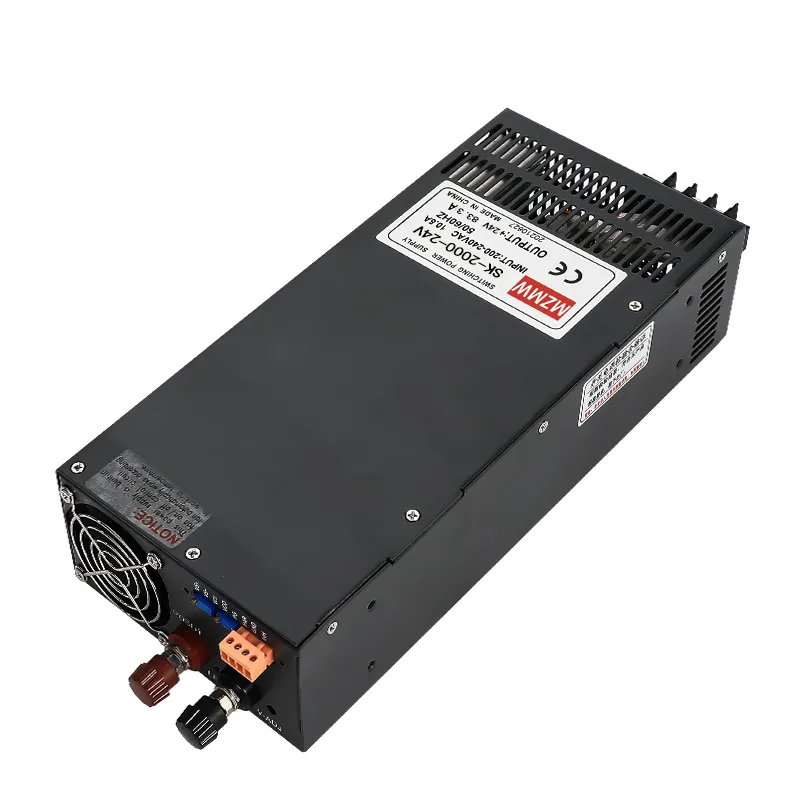
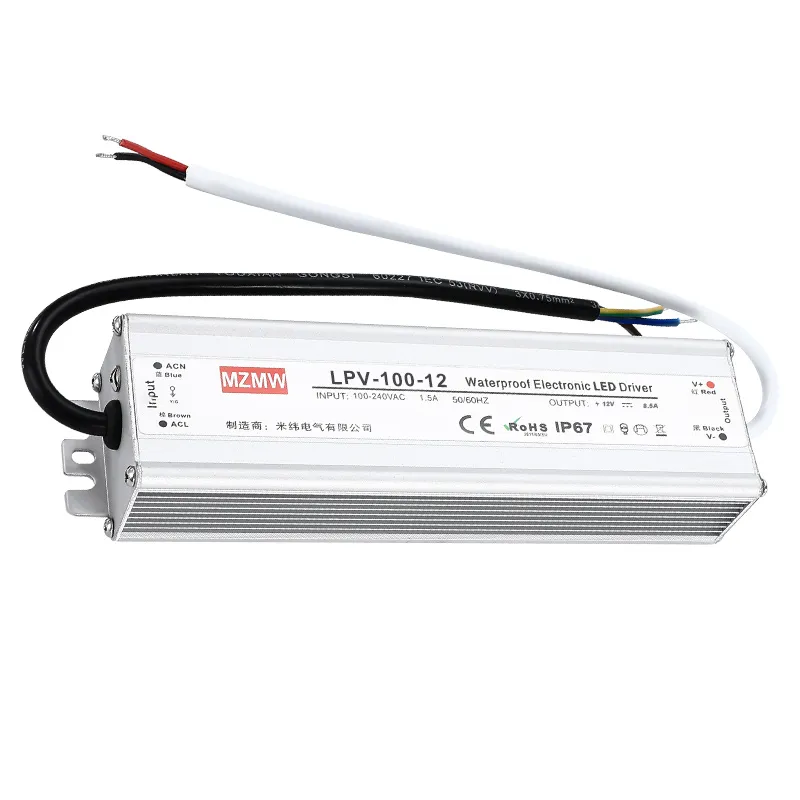
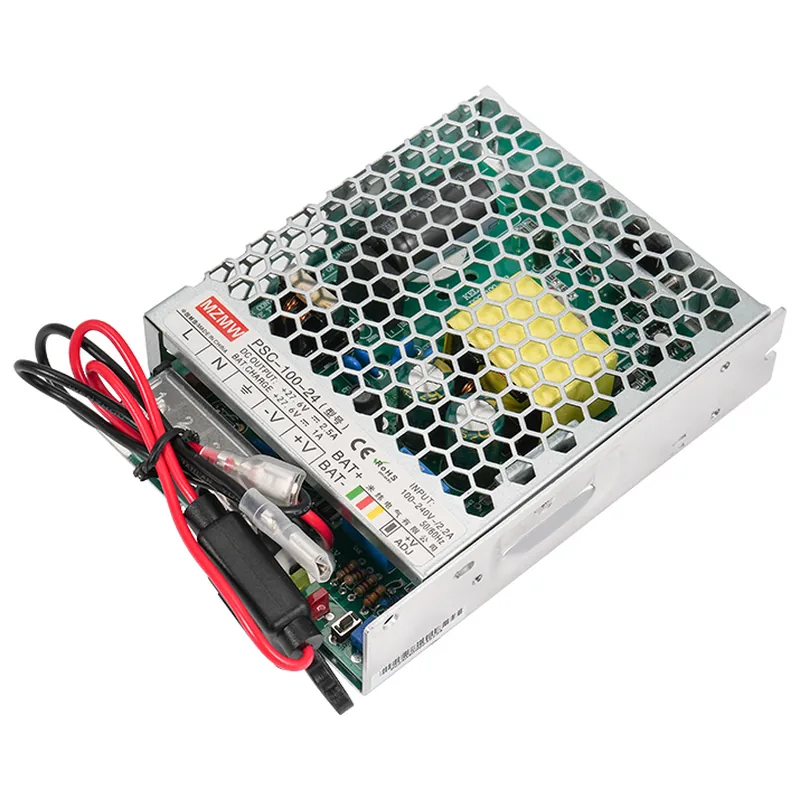
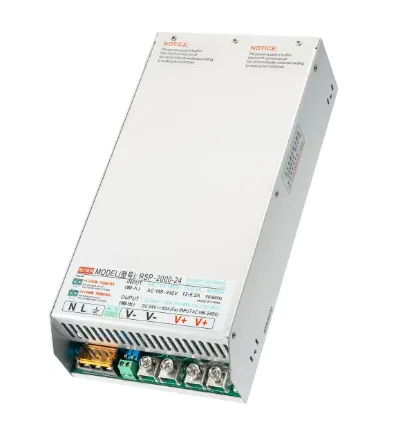
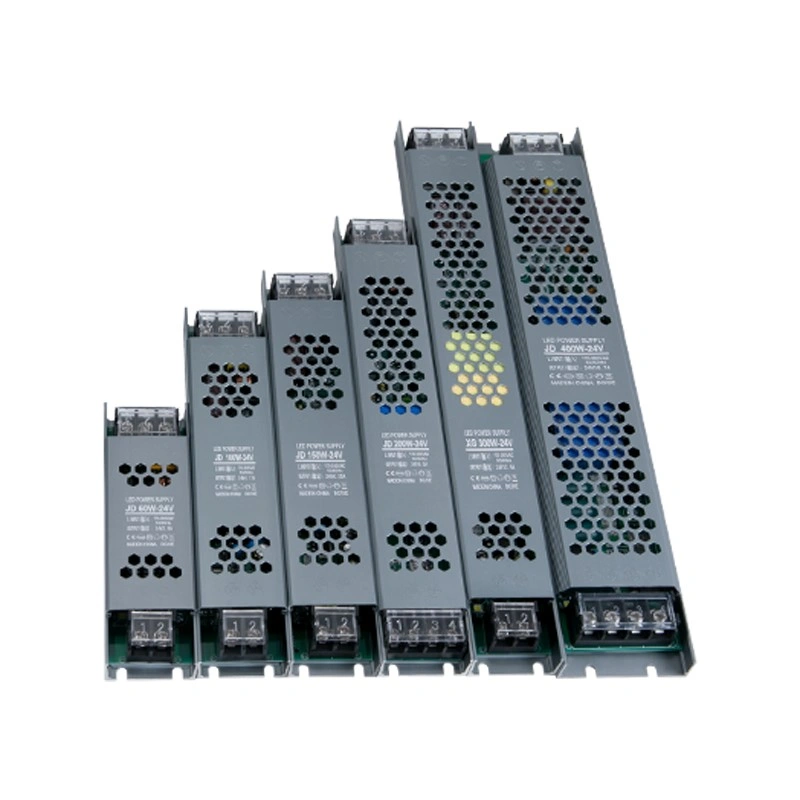
In modern architectural illumination, linear cove lighting, retail display fixtures, and ultra-thin advertising lightboxes, space constraints inside aluminum profiles are increasingly tight. Traditional bulky power bricks simply do not fit.
Engineers and lighting contractors face two persistent design headaches:
- Physical clearance: Housing a robust 100W–400W supply inside a narrow channel without heat trapping.
- Electrical transmission: Deciding between 12V DC and 24V DC constant voltage distribution across long linear strip runs to prevent visible voltage drop (end-to-end dimming).
The MZMW SL Series (ultra-slim long strip enclosure, 60W–400W) and SX Series (compact mini-profile, 18W–100W) are engineered specifically to solve these dual mechanical and electrical challenges.
Here is an engineering breakdown on sizing your LED power supply and optimizing circuit layout.
12V vs. 24V Constant Voltage: How to Choose?
Constant voltage LED strips run predominantly on either 12VDC or 24VDC. While both deliver clean, ripple-controlled power, their electrical characteristics dictate project feasibility:
| Parameter / Factor | 12V DC LED System | 24V DC LED System (Recommended for Projects) |
|---|---|---|
| Current for Same Power (e.g. 100W) | 8.33 Amps (Higher current) | 4.17 Amps (Halved current) |
| Voltage Drop Over Distance | Significant drop beyond 5 meters (16 ft) | Minimal drop; runs up to 10–15 meters reliably |
| Required Wire Gauge (AWG) | Thicker copper wires required | Thinner, lighter, cost-effective wire |
| Cutting Unit Resolution | Shorter cut intervals (typically every 3 LEDs, ~25–50mm) | Longer cut intervals (typically every 6 LEDs, ~50–100mm) |
| Best Application | Short runs, automotive, tight custom cabinetry | Commercial linear coves, signage, retail facades |
Engineering Rule of Thumb: For strip lengths exceeding 5 meters, always specify a 24V system. Since $P = V \times I$, doubling the voltage halves the operating current. Because voltage drop across conductor resistance is $\Delta V = I \times R$, cutting the current in half reduces power losses ($I^2R$) by 75%, eliminating visible dimming at the far end of the installation.
MZMW SL vs. SX Series: Form Factor & Power Classes
Both lines operate on 170–260VAC input, feature continuous short-circuit (SCP), over-load (OCP), and over-voltage (OVP) protections, and utilize pure aluminum extrusion bodies for passive thermal dissipation:
| Specification | SL Series (Long Strip Profile) | SX Series (Compact Slim Profile) |
|---|---|---|
| Power Range | 60W, 100W, 150W, 200W, 300W, 400W | 18W, 24W, 36W, 48W, 60W, 72W, 80W, 100W |
| Output Voltages | 12V DC / 24V DC | 12V DC / 24V DC |
| Physical Shape | Ultra-narrow elongated bar | Compact rectangular mini-chassis |
| Primary Placement | Side-mount inside lightbox aluminum frames, coves | Shallow display showcases, recessed ceiling slots |
| Cooling Method | High-efficiency aluminum extrusion heat sink | Passive convection casing |
3 Critical Design Rules for Commercial Installation
1. Apply the 80% Continuous Load De-rating Rule
Never size an LED driver at 100% of its rated capacity. For long commercial operating hours (e.g., retail stores running 12–16 hours daily), derate the power supply by 20%: $$\text{Max Continuous Strip Load} = \text{Rated Driver Power} \times 0.80$$ Example: If your LED strip array draws 150W total, specify at least a 200W driver (such as the SL-200-24).
2. Thermal Dissipation in Enclosed Troughs
Even with an efficiency rating $\ge 85%$, a 300W driver converts roughly 45W into waste heat. Ensure the aluminum backplate of the SL/SX unit is seated flush against the metal framework of the lightbox to use the structure as a giant heat sink.
3. Dual-End Power Feeding for Ultra-Long Runs
When linear strip runs exceed 10 meters, feed power from both ends (loop-in configuration) or inject power at the center point. This equalizes potential across the strip and extends LED phosphor lifespan.
Need Custom Voltages or Bulk OEM Supply?
MZMW manufactures switching power supplies and LED drivers with strict batch-to-batch consistency in our Wenzhou production facility. We provide custom DC outputs, specialized connectors, and private-label silk screening for architectural lighting manufacturers worldwide.
- Understand power conversion basics: What is SMPS?
- Inquire for volume pricing and sample evaluation: Contact MZMW Sales Engineering